

Tags: #ArtBasel #JamaicaRelief #ClimateResilience #Hydroponics #MiamiCulture #GlobalInterconnectedness
The air in Wynwood last December was thick—not just with the humid, salt-kissed breeze of Miami, but with the electric charge of Art Basel. It is a season where the world’s gaze turns toward the neon and the canvas, where "value" is often measured in brushstrokes and social capital. But inside Casa Nube, a different kind of value was being negotiated. It wasn’t about the price of an installation; it was about the cost of a crisis.
The evening, organized by Dame Good Lifestyle and Aloha Green Farms, served as a reminder of the invisible threads—the "hyper-connectivity"—that bind our luxurious playgrounds to the fragile ecosystems of our neighbors. While Miami danced, Jamaica was catching its breath after the catastrophic surge of Hurricane Melissa.

The Silent Thief: Soil Salinity
In the narrative of natural disasters, we are conditioned to look for the "loud" wreckage: the flattened roofs, the snapped power lines, the brown, "scorched" canopy of the Caribbean pine forests. But as the evening’s organizers highlighted, the most insidious damage is often silent and microscopic.
When a Category 5 monster like Melissa pushes the ocean onto the land, it leaves behind more than just water. It leaves behind salt.
"Storm surges have saturated Jamaican farmland with saltwater, rendering the soil toxic for traditional crops."
Historically, the "breadbasket" parishes—St. Elizabeth, Westmoreland, and Hanover—have been the lifeblood of the island. When salt permeates this earth, it creates a "storm after the storm." The soil, once a cradle for yams and peppers, becomes a tomb. This is where the human experience meets the chemical: a farmer standing over a field that looks fine to the naked eye, yet knowing it can no longer feed his children.

A Convergence of Visionaries
The response at Casa Nube was a testament to the power of the diaspora and the "Global Village." To see Robert Montague and Consul General Oliver Mair sharing a stage with Miami icons like Elo (Supercar Rooms Miami) and the artist Dark Buddha was to witness a dismantling of silos.
It was a strategic mobilization. The sponsors—Muscle Vodka, Saint Sauveur 1972, CWD Wraps, and Pylon Press—represented the machinery of Miami’s luxury economy being retooled for philanthropy. This is the "great thing achieved" in our modern world: the ability to bridge the gap between a supercar showcase and a soil crisis in a matter of hours.
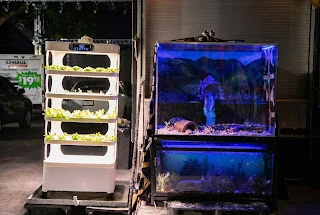
The Artists of Advocacy
The evening was anchored by creators who understood that art is not just a mirror, but a hammer to shape reality:
-
Won Jun Bemis: Bridging intricate detail with the bold expression of survival.
-
Kharij: Bringing the fresh, urgent energy of the Atlanta-New York corridor.
-
Takiyah Claytor: Using her platform as Miss South Atlanta 2024 to embody creative advocacy.
-
Kristin: Whose centerpiece became a literal focal point for the room's collective hope.