
There is a specific, haunting quiet that follows the violent erasure of a hurricane. When the winds finally die down and the floodwaters recede, what remains is often a landscape stripped of its vibrancy—a world rendered in the muted grays and browns of devastation. In these moments, the human spirit starves for two things: the physical sustenance to survive, and the emotional hope to rebuild.
For centuries, society has treated these two hungers as separate problems. We send crates of rations to heal the body, and eventually, we commission memorials to heal the soul. But what if the ration is the masterpiece? What if beauty and survival are not mutually exclusive, but profoundly symbiotic?
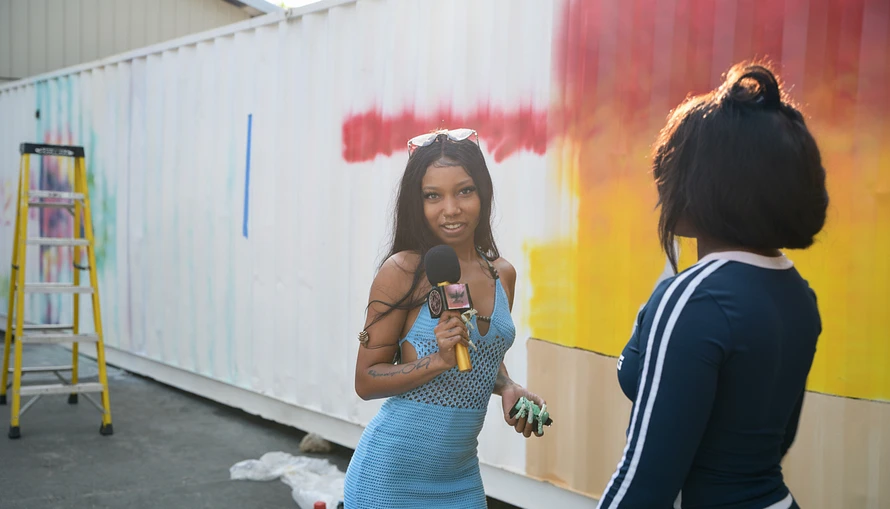
Enter Khari Hester, a visionary who is redefining the boundaries of human compassion through a radical synthesis of technology, agriculture, and paint.
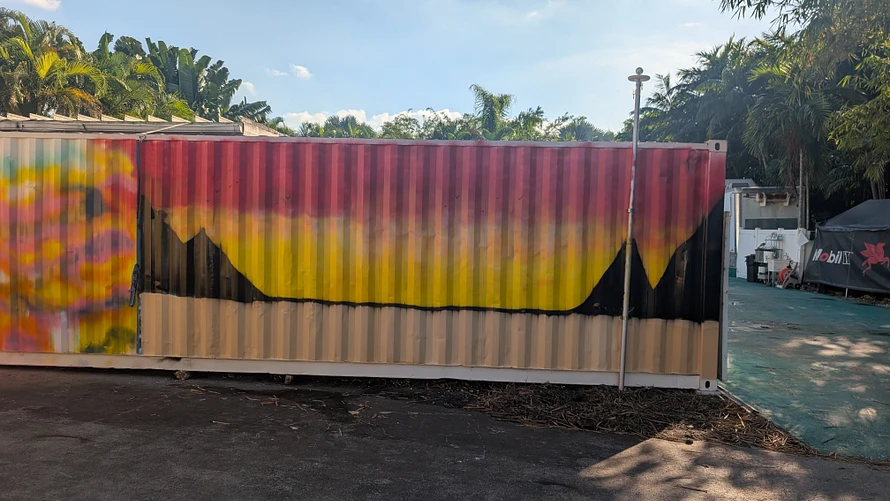
Hester is an "artivist"—an artist whose creative output serves as a direct vehicle for social and humanitarian progress. In a groundbreaking collaboration with Aloha Green Farms and Dame Good Lifestyle, she has transformed a massive, 40-foot shipping container from a cold vessel of globalized trade into a radiant, life-giving oasis. Destined for the hurricane-ravaged shores of Jamaica, this container is a fully functional, solar-powered hydroponic farm.
It is a monument that feeds the belly and the soul alike.

The Lineage of the Artivist
To understand the magnitude of Hester’s work, we must look at the history of art as a response to crisis. Historically, art has served as a mirror to tragedy. Think of the jagged, screaming forms of Picasso’s Guernica, or the sprawling, politically charged frescoes of the Mexican muralism movement led by Diego Rivera. These works documented suffering and demanded justice, but they remained bound to walls and canvases.
In our hyper-connected, technologically advanced world, Hester has evolved this lineage. We live in an era where an agricultural initiative in Hawaii, a lifestyle brand, and a contemporary artist can seamlessly collaborate to deploy high-tech disaster relief to the Caribbean. Hester recognized that in such a world, art no longer has to be a passive commentary on suffering. It can be the active cure.
“Art meets activism in a way that provides food for the hungry,” Hester notes, perfectly capturing the ethos of this new frontier.
Scaling the Medium: From Canvas to Corrugated Steel
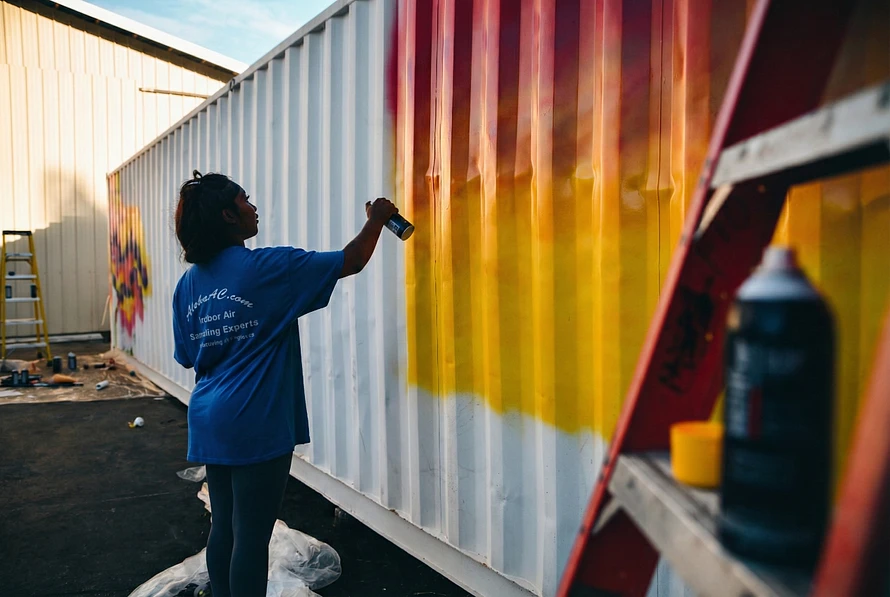
The genesis of this monumental project took root at the Art Festival 2025, hosted at Aloha Green Farms. It was here that the project was officially launched, serving as a vibrant collision of agricultural innovation and creative expression. But for Hester, the transition from traditional gallery spaces to this industrial scale was a crucible of physical and artistic endurance.
Imagine the sheer grit required to paint a shipping container. For years, Hester’s world was defined by the intimate relationship between a delicate brush and a taut, yielding canvas. Now, she found herself standing before a monolithic block of corrugated steel, baking under the sun.
The logistics of large-scale muralism demand a grueling physical toll. It requires scaffolding, sprayers, rollers, and a profound understanding of how light interacts with harsh, three-dimensional ridges. Every day, Hester scaled the metal beast, her boots splattered with paint, her shoulders aching from the repetitive strain of fighting gravity. Yet, with every stroke, the cold steel began to breathe. She enveloped the container in the brilliant, fiery gradients of a Jamaican sunset—a deliberate cultural homage designed to evoke warmth, identity, and the promise of a new dawn.

The Jamaica Mission: Collapsing Maslow’s Pyramid
When a disaster strikes, organizations traditionally rely on Maslow’s Hierarchy of Needs: food and shelter first, psychological and emotional needs later. Hester’s work boldly collapses this pyramid.
When this shipping container arrives in Jamaica, it will stand as a towering cultural landmark amid the wreckage. But beneath its painted exterior lies a marvel of modern engineering. The roof is lined with advanced solar panels, harvesting the Caribbean sun to power a self-sustaining hydroponic system inside. Where traditional farming would fail in soil poisoned by saltwater storm surges, this climate-controlled environment will yield continuous, nutrient-rich crops.
“The container is not just a painting; it is a life-sustaining technology,” Hester explains.
This dual role is the heart of her philosophy. Why go to the trouble of painting a hydroponic farm? Why not just send a sterile white box? Because a sterile white box feels like charity; a brilliantly painted mural feels like solidarity. When a community has lost everything, the sudden appearance of a towering, beautiful sunset—one that literally grows fresh food from its belly—provides an immeasurable psychological anchor. It reminds the community of their inherent dignity. It proves that they are not just worth saving; they are worth celebrating.

A Masterpiece That Breathes
We are witnessing a profound shift in how we approach humanitarian aid. Khari Hester’s journey from the quiet confines of a studio to the loud, gritty, and vital world of art-driven disaster relief is a testament to what we can achieve when we stop compartmentalizing human needs.
Through the synergy of Aloha Green Farms’ agricultural tech, Dame Good Lifestyle’s visionary backing, and Hester’s boundless creative empathy, a new standard has been set.
When the first green shoots of lettuce and tomatoes break through the water of those hydroponic trays, bathed in the hum of solar-powered LED lights, they will be growing inside a masterpiece. This is the ultimate triumph of the artivist: creating a world where beauty is no longer a luxury reserved for times of peace, but a vital, life-saving mechanism in times of crisis.
Tags: #Artivism #KhariHester #SustainableFarming #DisasterRelief #Hydroponics #AlohaGreenFarms #DameGoodLifestyle #HumanitarianArt #ClimateResilience #SocialImpact #Muralism
Photography by : Steve Ray
what video https://youtu.be/QZQUzRo9Q50